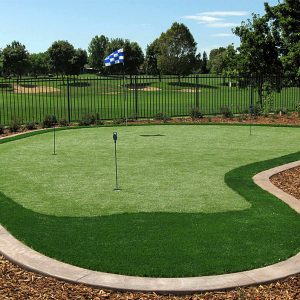
The sudden downpours across Florida in July and August saturate soil into mud and standing pools, turning natural grass yards into breeding grounds for mosquitoes. Typical yards simply cannot hold up under this pressure, which is why making the switch to synthetic turf in South Florida offers an ideal long-term solution for homeowners and property managers alike.
However, an artificial lawn is only as effective as the underlying site work, and without precise base preparation and drainage planning, even top-tier turf products will quickly fail when the tropical weather moves in.
Why Base Engineering Prevents Standing Water
High-performing synthetic turf installations rely heavily on the invisible groundwork beneath the green surface, where water must pass through the permeable backing and clear away from your property’s foundation as quickly as possible.
- Sub-base aggregate layering: Specialized crushed stone layers create a porous subterranean channel that absorbs high volumes of rainwater without displacing the ground above.
- Precision grading: Skilled synthetic grass contractors slope the sub-base materials so that heavy storm runoff flows naturally clear of home foundations and patio structures.
- Advanced backing technology: Commercial-grade drainage backings process over 30 inches of rain per hour, allowing water to pass through instantly rather than collecting on top.
When these engineering components work together, stormwater vanishes from the surface almost as fast as it hits, leaving you with a usable, dry yard within minutes after a severe thunderstorm passes.
What Separates Professional Installers From DIY Attempts
Laying synthetic grass is far more complex than rolling out a carpet over flat ground, and skipping crucial preparation steps almost always leads to sunken spots, exposed seams, and trapped moisture that ruins the installation over time.
Sub-Base Compaction
Loose soil naturally shifts and settles as it becomes saturated, but professional crews use heavy commercial mechanical compactors to compress the sub-base into a rock-solid, stable foundation that eliminates future dip hazards and prevents pooling for years to come.
Wind-Resistant Seam Joining
Florida’s intense tropical winds and heavy squalls will quickly grab and lift poorly secured edges, which is why certified installers use industrial-grade adhesives and heavy-duty turf fasteners to join every section seamlessly into a unified, storm-resistant system.
Uniform Infill Distribution
Infill adds ballast that holds the turf flat against high winds while supporting individual fibers so they bounce back after heavy foot traffic, and using professional broadcast spreaders ensures the material is distributed evenly across every square inch.
Partnering with reliable commercial artificial grass suppliers guarantees access to heavy-duty materials explicitly rated for extreme weather.
The Cost of Poor Installation
Inexperienced installers routinely cut corners by laying turf directly over flattened dirt or an inadequate layer of crushed rock, causing water to pool beneath the backing during peak hurricane season, where it softens the soil, creates unsightly ripples, and allows stagnant moisture to trap foul odors and bacteria underneath your yard. A proper commercial artificial grass installation avoids these nightmare scenarios completely by ensuring proper subsurface flow.
Contact Us for Synthetic Turf Installation in South Florida
At Complete Synthetic Turf, we bring over 60 years of combined experience installing hurricane-ready turf systems across South Florida and around the globe.
Call us today to schedule your free consultation and secure a mud-free lawn all year long.