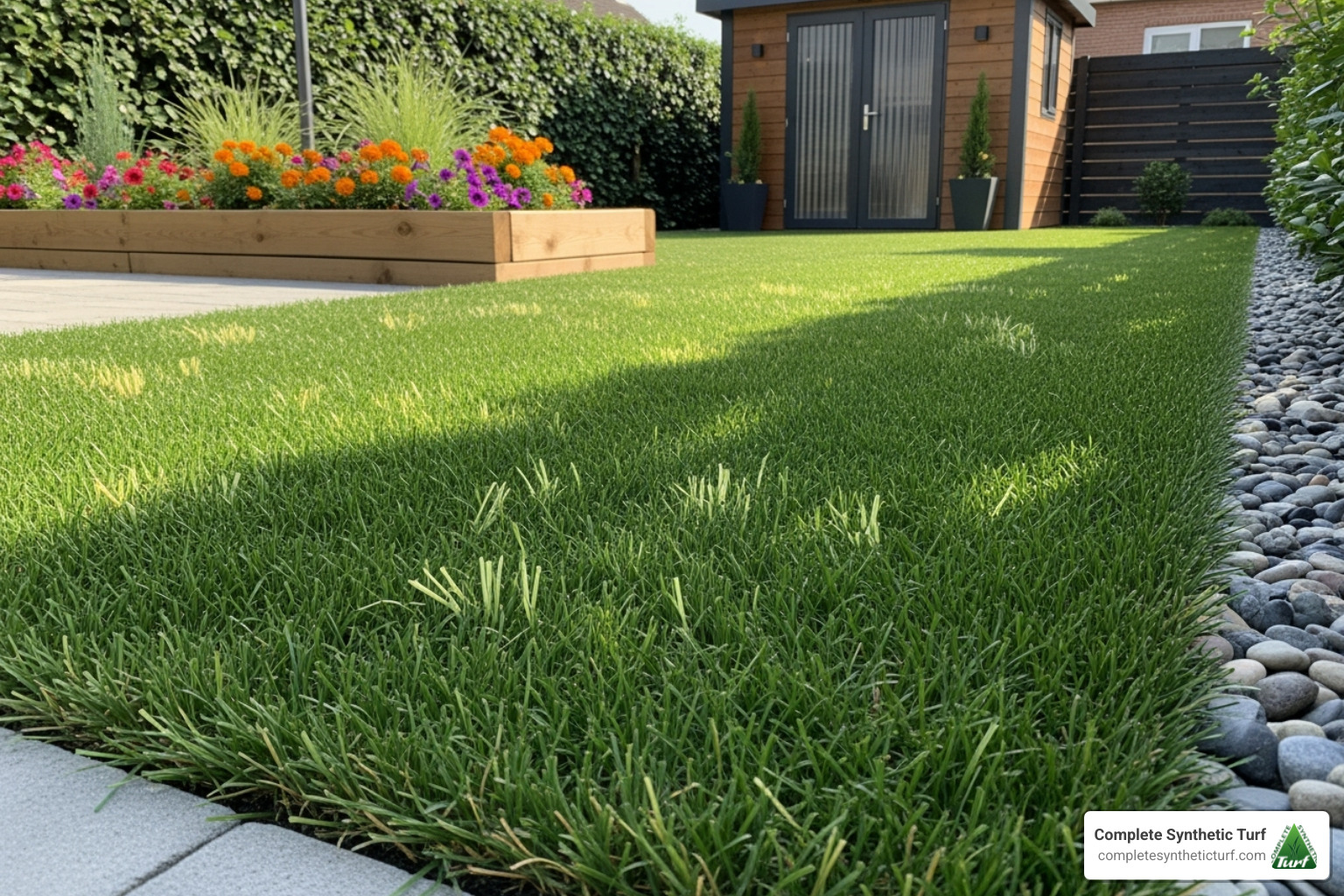

Artificial turf for residential use can solve several common landscaping problems, from muddy dog runs to narrow side yards where natural grass struggles. But each area has different needs. A front lawn prioritizes appearance, while a pet area needs suitable drainage and durable materials.
Before choosing turf, consider how you use each space and what the ground beneath it requires. Here are the most common residential applications and the installation details worth checking before work begins.
Where Can Artificial Turf Be Used Around a Home?
Artificial turf works in a variety of residential settings, including:
- Front lawns: Maintain a consistent green appearance throughout the year.
- Backyards: Provide a practical surface for everyday activities and gatherings.
- Side yards: Cover narrow strips that are difficult to mow or irrigate evenly.
- Pet areas: Handle regular use with appropriate drainage and pet-friendly infill.
- Pool surroundings: Reduce mud and grass clippings around outdoor entertaining areas.
- Play areas: Create a designated surface with suitable cushioning underneath.
- Putting greens: Add a practice area tailored to the available space.
- Problem spots: Replace struggling grass in shaded corners and other difficult-to-maintain areas.
Artificial turf can also reduce the need for lawn irrigation. The EPA’s WaterSense program notes that inefficient irrigation practices can waste significant amounts of outdoor water.
What Makes a Residential Turf System Different?
The right setup depends on how your household uses the space. Before selecting a product, consider:
- Foot traffic: Busy play areas need turf suited to regular use.
- Drainage: The system should account for rainfall and the property’s existing drainage conditions.
- Blade construction: Height and density influence the lawn’s appearance and feel.
- Infill: The right material depends on the application and desired performance.
- Base preparation: A properly prepared, compacted base helps create a stable surface.
- Pets and children: Regular use may require specific turf features and maintenance practices.
A decorative front lawn and a frequently used dog run may look similar, but their performance requirements can differ considerably.
What Should Homeowners Check Before Installation?
Ask your installer about surface preparation, drainage, seam placement, edge security, maintenance, and warranty coverage. These details help you understand what the finished system requires.
Installation quality matters. An uneven base can cause dips or puddles, while poorly secured seams and edges can lift over time. Choosing suitable turf is important, but proper preparation and installation also contribute to long-term performance.
Plan the Right Turf System for Your Home with Complete Synthetic Turf
From front lawns to pet areas, Complete Synthetic Turf helps homeowners choose products and installation methods suited to their properties. Our team brings over 60 years of combined experience and handles every step, from the first design conversation to the final walkthrough. Whether you’re replacing a tired lawn, building a backyard putting green, or creating a clean space for your dog, we’ll help you get it right the first time.
Contact us online or give us a call at (561) 739-4667 to schedule your free consultation and estimate. ¡Se habla español!
Frequently Asked Questions
Is artificial turf suitable for residential use?
Yes. Artificial turf can work well for lawns, pet areas, pool surroundings, play spaces, and putting greens when the product and installation method suit the intended use.