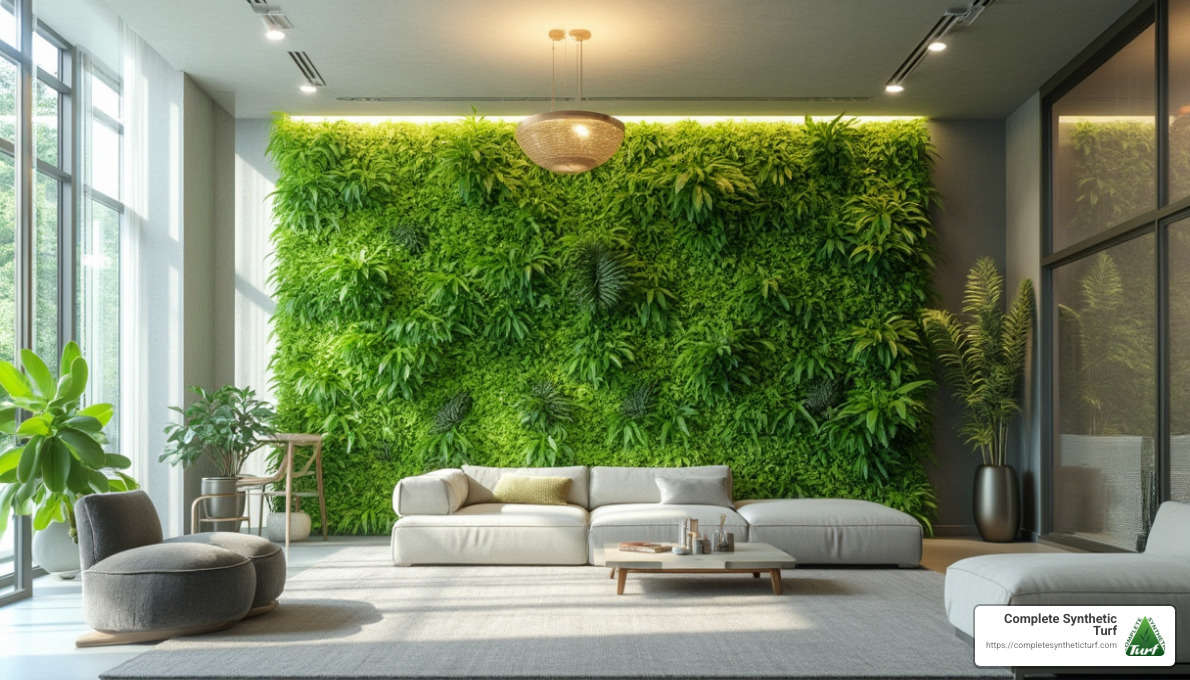
Artificial grass can turn a plain wall into a green feature, whether you’re updating an indoor accent wall or adding texture to an outdoor space. However, getting it to stay in place takes a little planning. The right attachment method depends on the wall material, the size of the installation, and exposure to sun, rain, and wind.
If you’re wondering how to fix artificial grass on a wall, start with surface preparation and choose a securing method suited to the conditions.
Can Artificial Grass Be Installed on a Wall?
Yes. Artificial grass can be attached to several wall surfaces, provided the substrate is sound and properly prepared. Common options include:
- Concrete and masonry: Require attachment products or fasteners compatible with the surface.
- Wood: May accommodate suitable mechanical fasteners or adhesives.
- Other substrates: Need an attachment method approved for the specific material.
How to Fix Artificial Grass on a Wall
Follow these steps to plan a secure installation:
- Prepare the wall: Remove dust, loose paint, and debris. Repair damaged areas and ensure the surface is suitable for the chosen attachment method.
- Measure the space: Check the wall’s dimensions and plan the placement of seams before cutting.
- Cut the turf: Where appropriate, cut from the backing side with a sharp blade to avoid damaging the grass fibers.
- Choose the attachment method: Suitable mechanical fasteners, adhesives, or mounting systems depend on the wall material and environmental conditions. Follow the product manufacturer’s instructions.
- Secure edges and seams: Pay particular attention to corners and exposed edges, where loose turf may begin to lift.
What Can Cause Wall-Mounted Turf to Fail?
Several common mistakes can affect how well artificial grass stays attached:
- Poor preparation: Dust and flaking paint can weaken adhesion.
- Incompatible materials: Not every adhesive or fastener works with every substrate.
- Loose edges: Inadequate securing can allow sections to peel away.
- Moisture buildup: Trapped water can damage certain adhesives and backing materials.
- Wind exposure: Exterior installations need attachment systems suited to local conditions.
When Should You Hire a Professional?
A small indoor project may be manageable as a DIY job. Larger installations, exterior walls, commercial spaces, and elevated surfaces often call for professional help.
Ladder safety is another consideration. The CDC’s NIOSH program reported 161 workplace fatalities and 22,710 workplace injuries involving ladders in the U.S. in 2020. For elevated installations, use appropriate equipment and safety precautions or hire an experienced crew.
Get a Secure Turf Wall Installation with Complete Synthetic Turf
Complete Synthetic Turf provides turf design and installation services across South Florida, helping homeowners and businesses plan installations suited to their spaces. The company reports projects across all 50 states and six continents.
Contact our team online or call (561) 739-4667 to schedule your free consultation and estimate. ¡Se habla español!
Frequently Asked Questions
How do you fix artificial grass on a wall?
Prepare the surface, measure and cut the turf accurately, and use an attachment system suited to the wall material and conditions. Secure edges and seams carefully to help prevent lifting.

